AE.org - website of the Acoustic Ecology Institute
newsCommunityResourcesSoundscapesAbout UsJoin Us
aeinews Home

Third Yellowstone Snowmobile Plan Tossed by Federal Court

News, Vehicles, Wildlands No Comments »

The eternal cycle of Yellowstone Winter Use Plans looks to continue for at least one more round, as the third “final” National Park Service rule governing snowmobile access to Yellowstone and Grand Teton National Parks has been tossed out by a Federal District Court after challenges form a consortium of environmental organizations.  DC-based judge Emmet Sullivan found that the NPS plan that would allow 540 snowmobiles to enter the parks each day was “arbitrary and capricious.” Sullivan expressed three key objections: the current average use of 263 snowmobiles is already exceeding the noise standards set by the Park Service (with the additional snowmobiles likely to further increase the area in which snowmobiles are audible for over half the day from 21 square miles to 63 square miles); NPS “utterly failed to explain why none of the seven alternatives would constitute impairment or unacceptable impacts” (despite NPS figures that suggest an increase in exhaust gasses and particulates of 18-100%); and NPS “failed to provide a rational explanation for the source of the 540 snowmobile limit.” The case turned on how to interpret the Organic Act, a 1916 law that established the Park Service

Read the rest of this entry »

5-Year Study Finds Little Impact on Sperm Whales From Distant Seismic Surveys, With Some Indications of Closer Range Effects

News, Science, Seismic Surveys No Comments »

The Minerals Management Service has released the final report of the Sperm Whale Seismic Study, which lasted five years and used acoustic D-tags that track the movements of whales while also recording received sound levels. Unfortunately, few of the 98 whales that were successfully tagged during the study came any closer than 5km to the seismic survey air guns being used as the test sound source, so the final conclusions only address long-range impacts. According to Doug Biggs of Texas A&M, one of the lead scientists, “The bottom line is that airgun noise from seismic surveys that are thousands of yards distant does not drive away sperm whales living in the Gulf.” Biggs also noted that some individual whales feeding at depth reduced the rate at which they made echolocation clicks while in search of prey when the air guns came closer; not enough instances of this occurred during the study to make definitive conclusions about how large an impact this might cause. The study provided a wealth of new information about the Gulf of Mexico sperm whale population, which appears to be genetically distinct from open-ocean sperm whale stockes, smaller in size and with distict vocalization patterns. Sources: PhysOrg.com, 8/21/08 [READ ARTICLE]  ScienceDaily/Texas A&M, 8/21/08 [READ ARTICLE]

AEI FactCheck: Navy/NRDC Battle of the Soundbites

Animal Communication, Human impacts, News, Science, Sonar No Comments »

Been wondering what’s up with the great “Sonar Kills Whales”/”Everything’s Fine, Just Go Away” rhetorical battle between NRDC and the Navy? As you might suspect, the reality is not nearly so neatly defined as either of them might suggest….and if you’re up for digging into it more deeply, the Acoustic Ecology Institute has just posted an AEI FactCheck that explores three key questions:

  • Dead Whales: How Common?
  • Behavioral Reactions: Millions of Whales Affected, or Negligible Impact
  • Additional Mitigation: Common Sense Precautions or Undermining Sailor Safety?

There’s a fair dose of decoding science and regulatory details in this document, as well as acknowledgment of the underlying unspoken ethical questions that lead to radically different perspectives on the same data.

Check it out at
http://www.AcousticEcology.org/srSonarFactCheck.html
AEI is a resource/information center for sound-related environmental issues, run by editor/writer Jim Cummings (yup, that’s me…). We’ve some how managed to become friends with top scientists and agency staff, major environmental groups, and even a few folks in the Navy and oil and gas industry. More at http://AEInews.org

US Navy Agrees to Geographical Limits on LFAS

News, Sonar No Comments »

A federal district court has approved a settlement between the Navy and a NRDC-led coalition of environmental groups that will limit training missions using Low-Frequency Active Sonar to several specific regions in the Paciific Ocean. Negotiations were ordered by the court after NRDC challenged the legality of permits the Navy received which would have allowed nearly worldwide use of the powerful submarine-detection system. Ed note: in practice, the Navy’s two LFAS-equipped ships have remained in the western Pacific, where they can monitor Chinese and North Korean subs. The new agreement allows the Navy to use LFAS in more areas than were allowed under a similar agreement several years ago, including waters near the Philippines and Japan (with seasonal restrictions), as well as areas north and south of Hawaii, while explicitly banning its use in some biologically important areas, including marine sanctuaries near Hawaii. Read the rest of this entry »

US Researchers Observe Whale Reactions to Sonar; UK Report Suggests “Significant” Behavioral Responses

Animal Communication, News, Science, Sonar No Comments »


As a new UK Navy report suggests that beaked whales made “potentially very significant” behavioral changes in response to mid-frequency active sonar signals, a team of scientists has just completed a pilot study that involved monitoring the detailed behavior of whales during a major Naval exercise. The UK military report details observations of whale activity during Operation Anglo-Saxon 06, a submarine war-games exercise in 2006. Produced for the UK’s Defence Science and Technology Laboratory, the study used an array of hydrophones to listen for whale sounds during the war games. Across the course of the exercise, the number of whale recordings dropped from over 200 to less than 50. “Beaked whale species appear to cease vocalizing and foraging for food in the area around active sonar transmissions,” said the report.  Read the rest of this entry »

UK Wind Farm Plan Abandoned; Developer Cites Responsibility to Avoid Noise Problems for Neighbors

Human impacts, News, Wind turbines No Comments »

Plans for a modest-sized wind farm in rural Wales have been abandoned after one of the developers decided that it would have to be cut in half to meet local noise standards. While energy company E.On had hoped to build a 10 megawatt, 8-turbine wind farm, their analysis showed that only a 5 megawatt project would avoid causing a “noise nuisance” to nearby homes, and they could not justify investing in the smaller project. E.On’s head of new business Danny Shaw said: “We certainly didn’t take this decision lightly but, as a responsible developer, we simply wouldn’t be willing to build a scheme that we thought had the potential to exceed acceptable noise limits.” E.On’s planned partner, Arts Factory, hopes to proceed with the smaller project. Arts Factory chief executive Elwyn James said, “We’re disappointed obviously, although we would be just as cautious as E.On about the possibility of causing noise disturbance.” Source: BBC News. 7/2/08 [READ ARTICLE]

Navy Releases First EIS for Sonar Training; Hawaii Range Targeted for Continued Sonar Training, Using Current Safety Procedures

News, Sonar No Comments »

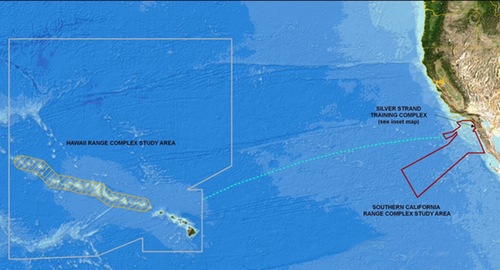
The US Navy has released its first completed Environmental Impact Statement examining active sonar training activities, this one covering training in waters around Hawaii, and proposing to continue current Navy operating procedures, rather than adopting more stringent safety measures. Eleven other regional training ranges are receiving similar scrutiny, with draft EISs released for two, and the final decisions planned for all by the end of 2009. Read the rest of this entry »

Beaked Whales Strand in New Jersey, Florida; Sonar Possible, but Other Causes Likely

News, Sonar 1 Comment »

The appearance of beaked whales on beaches always raises concern about possible sonar impacts, since these deep-diving whales are the family that is apparently most sensitive to mid-frequency active sonar. Over the past couple of weeks, two beaked whales stranded, one dead near Atlantic City, one alive in Florida. The Florida whale has been diagnosed with meningitis, along with infections in multiple organs and a heavy parastic infection in its liver. The whale was too ill to return to the sea; it was euthanized after Navy scientists conducted hearing tests, which have rarely been possible with beaked whales. The Atlantic City whale underwent a necropsy; initial results did not show any clear cause of death or weakness. The Navy has said that there has been no active sonar activity within a hundred miles of Atlantic City since a major exercise ended in early June; while this does not preclude the possibility that the whale was injured while escaping sonar signals, the single animal does not match earlier incidents that involved multiple animals or species. A beaked whale that stranded in the same area in December had an inner ear infection, which could have contributed to its stranding. While ongoing research and closer public scrutiny are offering a clearer sense of the ways that sonar affects beaked whales (especially triggering dangerous/injurious fleeing behavior), it is also important to remember that not every dead whale is a victim of sonar impacts. Sources: CBS4.com, 6/25/08 [READ ARTICLE] Press of Atlantic City, 6/29/08 [READ ARTICLE]

US Navy Continues Campaign to Calm Sonar Fears, Resist New Restrictions; Scientists Question Navy’s “Absolute” Threshold of Proof of Harm

News, Sonar No Comments »

The US Navy continued its increasingly adamant defense of its mid-frequency sonar training program this week, with the US Pacific Fleet Commander telling reporters that court-ordered restrictions are making it more difficult to train. Admiral Robert Willard said that one of his strike groups showed “adequate, although degraded” anti-submarine warfare proficiency during recent exercises off California. The fleet certified the group anyway, but noted the ships altered standard techniques and procedures to comply with court rulings. Willard said sailors were learning artificial tactics they wouldn’t use in the real world. “Translate that into the Western Pacific or into the Middle East, where quiet diesel-powered submarines exist in large numbers, and we’re potentially in trouble,” Willard said. Meanwhile, during a field trip to a Navy destroyer off the coast of Virginia, Jene Nissen, the Navy’s environmental acoustics manager, said the Navy was working hard to align their practices with what scientists say is necessary, stressing the lack of any strandings “linked scientifically” to Navy activities during 40 years of presence on the east coast. Some of the scientists on board as experts for the press questioned the Navy’s absolute assurance, noting several incidents in which mid-frequency sonar is suspected of causing strandings or agitated reaction among whales, though absolute proof was not found. Nina Young of the Ocean Leadership Consortium (a program that coordinates several agency ocean programs) said the Navy uses uncertain cause of death rulings to downplay possible links between sonar and mammals. “It’s unfortunate that the threshold for the Navy seems so absolute, and the burden of proof so high, that it undermines efforts to engage in a productive discussion, she said. Andrew Wright, a marine mammal scientist who has worked for the Marine Mammal Commission and NOAA, said definitive proof of sonar’s effect on whales didn’t exist until recently. “We’ve only really known about the problem since 2000, 2002. We don’t have long-term information, even on humans,” Wright said later. “There’s so much uncertainty around this, and it all depends on where you place the burden of proof.” Sources: The Virginian-Pilot, 6/16/08 [READ ARTICLE]  San Diego Union-Tribune, 6/10/08 [READ ARTICLE]

UK Navy Tests Airguns as Alternative to Explosions for Shock Trials

News, Ocean, Sonar No Comments »

In the wake of the Falmouth Bay strandings, the UK Navy has announced that it has been testing a new approach to “shock trials,” meant to be less dangerous for marine life. Shock trials test the resilience of ships to mines and torpedoes, typically accomplished by setting off large explosions near the ships. The new technique uses airguns, which release blasts of compressed air, in place of explosives. A Ministry of Defense spokesman said that the resulting pressure waves are less intense, adding that “the new approach reduces the risks to the environment as the only by-product is hot air bubbles.” This statement neglects to mention that another by-product is intense noise, and that, to fulfill its purpose in testing the resilience of ships, there is also a strong pressure wave created. Likely the airgun pulse is less sudden (i.e., the sound wave has a longer rise time), which may help reduce hearing-related damage, but it, like all airguns, will create a startling sound at close range (up to a km or so), and be audible for tens of kilometers at least. The brief press mention of this new “dolphin-friendly weapon” did not clarify whether the system was being used around Falmouth Bay at the time of the strandings; local reports indicate unusual explosive sounds were heard. Source: London Sunday Mirror, 6/15/08 [READ ARTICLE]

Navy Complains About Varying Sonar Rules

News, Sonar No Comments »

After routine pre-deployment training exercises in Hawaii, some Navy personnel have complained that the differing operational requirements imposed by federal courts in Hawaii and California are complicating, and at times compromising, their mission. Rear Adm. James P. “Phil” Wisecup, commander of the strike group, said the changing sonar rules “just complicate things” in a warfare area that’s already very complex. “In the end, just give me a standard, and I can meet it,” Wisecup said, “But if the standard changes — and it is changing from one area to another — as different judges interpret the law and make decisions on a very complex issue — then we have to adapt.” Read the rest of this entry »

This Ain’t No Disco

News No Comments »

David Byrne is behind a public sound art project set to open this summer in New York’s Battery Maritime Building, an old waterfront structure. Keyboards, to be played by passers-by, will blow air through exposed pipes, creating deep flute-like sounds, trigger vibrations in steel girders so that they hum, and strike metal columns to ring with gong-like sounds. “It sounds really simple, but it’s kind of a lot of fun,” said Byrne, who started the Talking Heads. “It’s more than fun — it’s awe-inspiring.” Read the rest of this entry »

Towns Seek Setbacks for Wind Turbines to Protect Residents from Noise, Companies Concerned

News, Wind turbines No Comments »

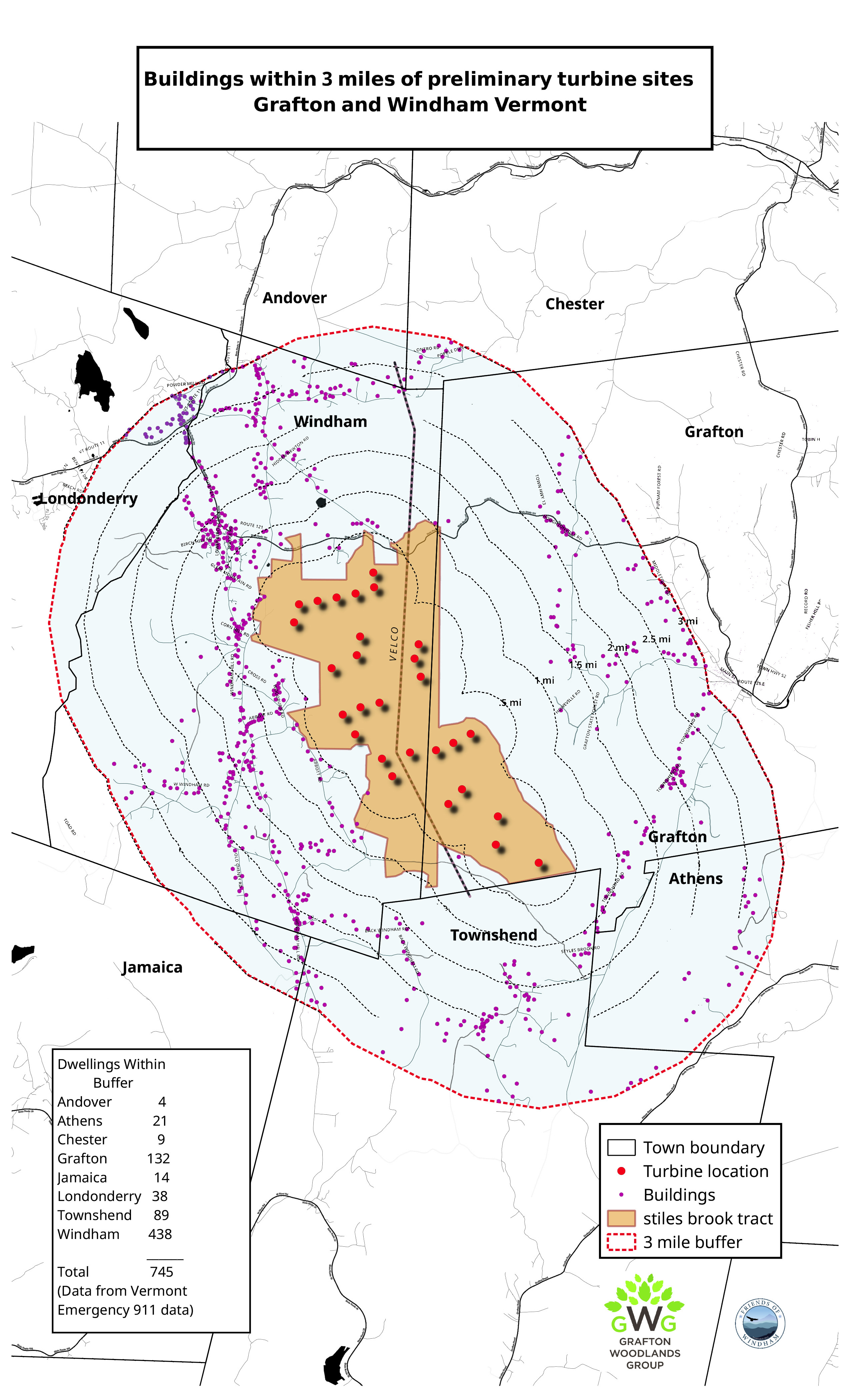
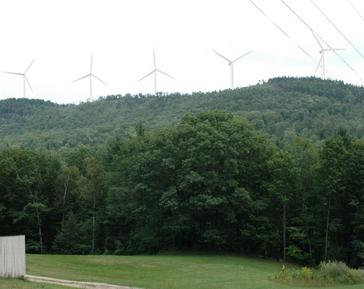
Across the eastern and central United States and Canada, small towns are writing ordinances to govern wind farm development, grappling with uncertainty about reasonable buffer zones to assure that residents will not be disturbed by turbine noise. In recent months, stories about several specific wind farms that have caused noise complaints have circulated more widely, raising local concerns elsewhere about the common practice of using 1000- to 1500-foot setbacks (with Mars Hill in Maine and Allegheny Ridge in Pennsylvania being the most commonly cited). The research and testimony of two doctors, one in New York and one in Italy, and several acoustics consultants, all of whom advocate for much larger buffers between large turbines and residences, are beginning to influence local towns to adopt more stringent ordinances, which energy companies say will severely limit their abilty to find suitable sites for wind farms. Read the rest of this entry »

Seismic Surveys at Forefront of Offshore Alaska Development Resistance

Effects of Noise on Wildlife, News, Seismic Surveys No Comments »

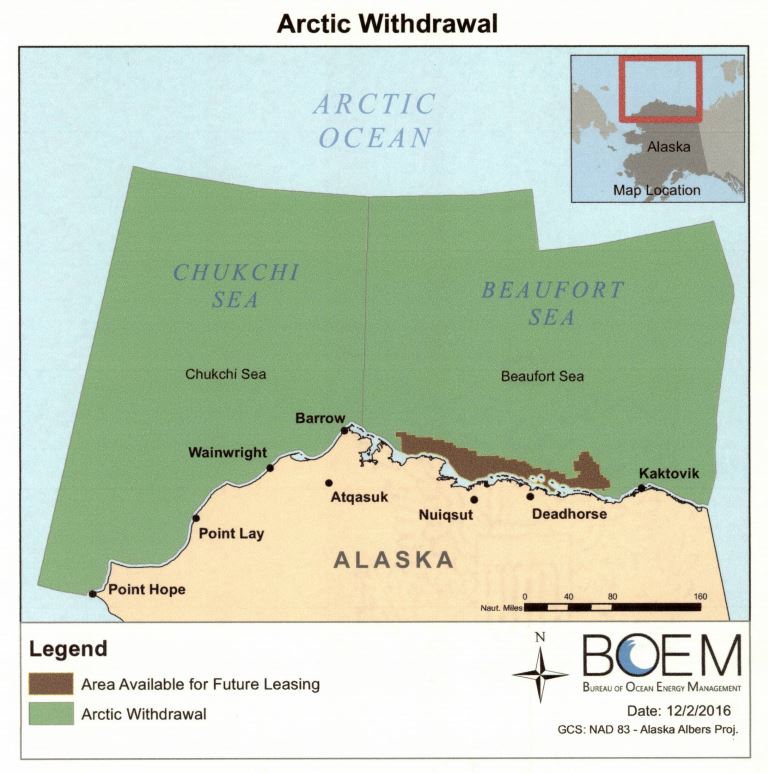
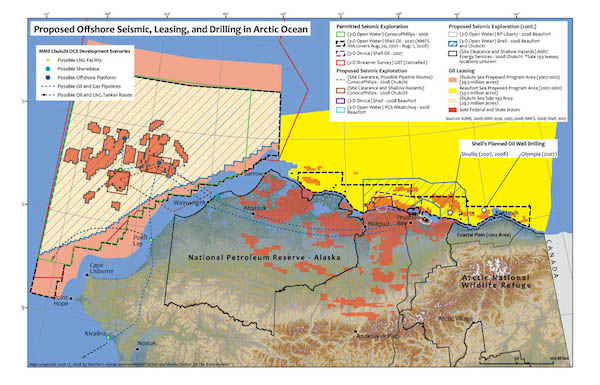
 A surge in lease sales along Alaska’s west and north coasts has spurred predictable resistance from locals and environmental groups. While the effect of any possible oil spills in harsh waters is certainly a major focus of concerns being voiced, the impacts of the first phase of oil and gas exploration have moved to the forefront of discussions. The oil industry is gearing up to explore a record number of offshore lease areas in the next few years, and this summer, up to five seismic survey vessels are scheduled to be off the Alaskan coast, firing airguns 2-4 times per minute and listening for the echoes Read the rest of this entry »

Pennsylvania Couple Sues to Stop Noise from Wind Farm

Human impacts, News No Comments »

 Todd and Jill Stull of Portage, Pennsylvania have sued the operators of the Allegheny Ridge Wind Farm, alleging that the turbines near their homes create noise in excess of local regulatory limits. Attorney Bradley Tupi, representing the Stulls, alleges in the lawsuit that Gamesa Energy misrepresented to local officials the noise levels from the turbines to get approvals for construction of the wind farm. “They assured the officials in the township in question that the turbines would be quiet. Read the rest of this entry »

Wisconsin Country Implements Strict Noise Regulations on Wind Turbines; Company Declares “War to End All Wars”

Health, Human impacts, News No Comments »

Calumet County, in eastern Wisonsin, recently faced a dilemma that is increasingly common in rural America: an outside company had appeared in their region, planning to build wind farms and seeking permits. Many local governmental bodies have taken a cursory look at complex reports submitted by companies, taken assurances of “no noise” at face value, and later regretted not learning more. The Calumet County Board of Supervisors took two years to consider the issue, and in March instituted a carefully considered ordinance to govern wind farm development that is exceedingly (perhaps even excessively) weighted toward protection of local residents from noise impacts. Read the rest of this entry »