AE.org - website of the Acoustic Ecology Institute
newsCommunityResourcesSoundscapesAbout UsJoin Us
aeinews Home

Multi-year Sperm Whale Study in GOM Shows Lack of Avoidance at Long-Range, Possible Foraging Changes

Science, Seismic Surveys No Comments »


LAY SUMMARY OF THE FOLLOWING RESEARCH REPORT: 
Jochens, A., D. Biggs, K. Benoit-Bird, D. Engelhaupt, J. Gordon, C. Hu, N. Jaquet, M. Johnson, R. Leben, B. Mate, P. Miller, J. Ortega-Ortiz, A. Thode, P. Tyack, and B. Würsig. 2008. Sperm whale seismic study in the Gulf of Mexico: Synthesis report. U.S. Dept. of the Interior, Minerals Management Service, Gulf of Mexico OCS Region, New Orleans, LA. OCS Study MMS 2008-006. 341 pp. [DOWNLOAD REPORT]
For four summers, from 2002-2005, a diverse team of researchers studied the sperm whale populations of the northern Gulf of Mexico; this final report presents the results of three distinct lines of research: to learn more about the population sizes, social patterns, and group and individual behavior of this population of sperm whales, to characterize habitat use in this area, and to examine possible changes in behavior in response to the noise of seismic survey airguns. By all accounts, the study was very successful on the first two counts, dramatically increasing our understanding of the overall populations and habitat use, especially in the key areas of the Gulf where the oil and gas industry is moving into deeper waters. It is the third topic, effects of noise, that especially interest us here at AEI, and on this count, the results were not as clear-cut. Over the course of two field seasons in which researchers attached acoustic D-tags to sperm whales, only a total of eight whales were tagged and subsequently exposed via controlled exposure to air guns towed by ships participating in the study. Read the rest of this entry »

5-Year Study Finds Little Impact on Sperm Whales From Distant Seismic Surveys, With Some Indications of Closer Range Effects

News, Science, Seismic Surveys No Comments »

The Minerals Management Service has released the final report of the Sperm Whale Seismic Study, which lasted five years and used acoustic D-tags that track the movements of whales while also recording received sound levels. Unfortunately, few of the 98 whales that were successfully tagged during the study came any closer than 5km to the seismic survey air guns being used as the test sound source, so the final conclusions only address long-range impacts. According to Doug Biggs of Texas A&M, one of the lead scientists, “The bottom line is that airgun noise from seismic surveys that are thousands of yards distant does not drive away sperm whales living in the Gulf.” Biggs also noted that some individual whales feeding at depth reduced the rate at which they made echolocation clicks while in search of prey when the air guns came closer; not enough instances of this occurred during the study to make definitive conclusions about how large an impact this might cause. The study provided a wealth of new information about the Gulf of Mexico sperm whale population, which appears to be genetically distinct from open-ocean sperm whale stockes, smaller in size and with distict vocalization patterns. Sources: PhysOrg.com, 8/21/08 [READ ARTICLE]  ScienceDaily/Texas A&M, 8/21/08 [READ ARTICLE]

AEI FactCheck: Navy/NRDC Battle of the Soundbites

Animal Communication, Human impacts, News, Science, Sonar No Comments »

Been wondering what’s up with the great “Sonar Kills Whales”/”Everything’s Fine, Just Go Away” rhetorical battle between NRDC and the Navy? As you might suspect, the reality is not nearly so neatly defined as either of them might suggest….and if you’re up for digging into it more deeply, the Acoustic Ecology Institute has just posted an AEI FactCheck that explores three key questions:

  • Dead Whales: How Common?
  • Behavioral Reactions: Millions of Whales Affected, or Negligible Impact
  • Additional Mitigation: Common Sense Precautions or Undermining Sailor Safety?

There’s a fair dose of decoding science and regulatory details in this document, as well as acknowledgment of the underlying unspoken ethical questions that lead to radically different perspectives on the same data.

Check it out at
http://www.AcousticEcology.org/srSonarFactCheck.html
AEI is a resource/information center for sound-related environmental issues, run by editor/writer Jim Cummings (yup, that’s me…). We’ve some how managed to become friends with top scientists and agency staff, major environmental groups, and even a few folks in the Navy and oil and gas industry. More at http://AEInews.org

US Navy Agrees to Geographical Limits on LFAS

News, Sonar No Comments »

A federal district court has approved a settlement between the Navy and a NRDC-led coalition of environmental groups that will limit training missions using Low-Frequency Active Sonar to several specific regions in the Paciific Ocean. Negotiations were ordered by the court after NRDC challenged the legality of permits the Navy received which would have allowed nearly worldwide use of the powerful submarine-detection system. Ed note: in practice, the Navy’s two LFAS-equipped ships have remained in the western Pacific, where they can monitor Chinese and North Korean subs. The new agreement allows the Navy to use LFAS in more areas than were allowed under a similar agreement several years ago, including waters near the Philippines and Japan (with seasonal restrictions), as well as areas north and south of Hawaii, while explicitly banning its use in some biologically important areas, including marine sanctuaries near Hawaii. Read the rest of this entry »

US Researchers Observe Whale Reactions to Sonar; UK Report Suggests “Significant” Behavioral Responses

Animal Communication, News, Science, Sonar No Comments »


As a new UK Navy report suggests that beaked whales made “potentially very significant” behavioral changes in response to mid-frequency active sonar signals, a team of scientists has just completed a pilot study that involved monitoring the detailed behavior of whales during a major Naval exercise. The UK military report details observations of whale activity during Operation Anglo-Saxon 06, a submarine war-games exercise in 2006. Produced for the UK’s Defence Science and Technology Laboratory, the study used an array of hydrophones to listen for whale sounds during the war games. Across the course of the exercise, the number of whale recordings dropped from over 200 to less than 50. “Beaked whale species appear to cease vocalizing and foraging for food in the area around active sonar transmissions,” said the report.  Read the rest of this entry »

Beaked Whale Stranding at End of Month-long Navy Exercises

Sonar No Comments »

As the US Navy approaches the end of the month-long multinational RIMPAC training exercise in waters around Hawaii, a single Cuvier’s beaked whale has turned up on a Maui beach. After several hours of near-shore struggle, it was euthenized and taken to Hawaii Pacific University for a necropsy, to attempt to determine the cause of death. Beaked whales have been the most common species associated with sonar-induced strandings, but previous incidents have usually involved several animals at a time. It is unclear how close sonar exercises were to the stranding site, though the Navy initiated aerial surveys of coastlines within ten miles of the Maui site, and did not see any other stranding victims. Read the rest of this entry »

Beaked Whales to be Tagged and Monitored During World’s Largest Joint Navy Exercise

Bioacoustics, Sonar No Comments »

For the first time, researchers will have the chance to see in detail how beaked whales respond to actual military active sonar exercises, thanks to two studies taking place during the biannual RIMPAC exercises around Hawaii this month. RIMPAC, the world’s largest multi-national naval exercise, involves 20,000 troops from ten countries, and runs through July. One team will be tracking dive patterns only on 30-35 whales, while researchers from another team will attach suction-mounted D-tags to beaked whales; the tags remain attached for several hours before falling off and rising to the surface for retrieval. While attached, the tags track the dive patterns of the whales, as well as recording all sounds, so that researchers can hear what sound level triggered any observed behavioral changes. D-tag studies have been an increasingly valuable research tool over the past several years, but until now, had been used only in controlled experimental settings (with researchers making or playing sounds in the vicinity), rather than in “real world” settings. Sources: AP, 7/3/08 [READ ARTICLE]

Navy Releases First EIS for Sonar Training; Hawaii Range Targeted for Continued Sonar Training, Using Current Safety Procedures

News, Sonar No Comments »

The US Navy has released its first completed Environmental Impact Statement examining active sonar training activities, this one covering training in waters around Hawaii, and proposing to continue current Navy operating procedures, rather than adopting more stringent safety measures. Eleven other regional training ranges are receiving similar scrutiny, with draft EISs released for two, and the final decisions planned for all by the end of 2009. Read the rest of this entry »

Beaked Whales Strand in New Jersey, Florida; Sonar Possible, but Other Causes Likely

News, Sonar 1 Comment »

The appearance of beaked whales on beaches always raises concern about possible sonar impacts, since these deep-diving whales are the family that is apparently most sensitive to mid-frequency active sonar. Over the past couple of weeks, two beaked whales stranded, one dead near Atlantic City, one alive in Florida. The Florida whale has been diagnosed with meningitis, along with infections in multiple organs and a heavy parastic infection in its liver. The whale was too ill to return to the sea; it was euthanized after Navy scientists conducted hearing tests, which have rarely been possible with beaked whales. The Atlantic City whale underwent a necropsy; initial results did not show any clear cause of death or weakness. The Navy has said that there has been no active sonar activity within a hundred miles of Atlantic City since a major exercise ended in early June; while this does not preclude the possibility that the whale was injured while escaping sonar signals, the single animal does not match earlier incidents that involved multiple animals or species. A beaked whale that stranded in the same area in December had an inner ear infection, which could have contributed to its stranding. While ongoing research and closer public scrutiny are offering a clearer sense of the ways that sonar affects beaked whales (especially triggering dangerous/injurious fleeing behavior), it is also important to remember that not every dead whale is a victim of sonar impacts. Sources: CBS4.com, 6/25/08 [READ ARTICLE] Press of Atlantic City, 6/29/08 [READ ARTICLE]

Orcas Avoid Mid-frequency Sonar Signals, but not LFAS; Herring Unaffected

Science, Sonar No Comments »

Kvadsheim, Benders, Miller, Doksaeter, Knudsen, Tyack, Nordlund, Lam, Samarra, Kleivane, Godo. Herring (slid), killer whales (spekknogger) and sonar - the 3S-2006 cruise report with preliminary results. Norwegian Defence Research Establishment (FFI). 30 April 2007 
This paper reports preliminary results from an ambitious multi-national Controlled Exposure Experiment using acoustic D-tags, which allow researchers to record received sound levels while charting dive patterns. Six orcas were tagged, with 17 hours of data collected, with one animal exposed to LFAS signals, two to mid-frequency active sonar signals, and one used as a control, fewer samples than hoped. The whale exposed to LFAS signal did not change its behavior, nor did its companions. However, the group exposed to mid-frequency sonar signals ceased feeding and moved rapidly away; in addition, they exhibited an unusual dive pattern, Read the rest of this entry »

US Navy Continues Campaign to Calm Sonar Fears, Resist New Restrictions; Scientists Question Navy’s “Absolute” Threshold of Proof of Harm

News, Sonar No Comments »

The US Navy continued its increasingly adamant defense of its mid-frequency sonar training program this week, with the US Pacific Fleet Commander telling reporters that court-ordered restrictions are making it more difficult to train. Admiral Robert Willard said that one of his strike groups showed “adequate, although degraded” anti-submarine warfare proficiency during recent exercises off California. The fleet certified the group anyway, but noted the ships altered standard techniques and procedures to comply with court rulings. Willard said sailors were learning artificial tactics they wouldn’t use in the real world. “Translate that into the Western Pacific or into the Middle East, where quiet diesel-powered submarines exist in large numbers, and we’re potentially in trouble,” Willard said. Meanwhile, during a field trip to a Navy destroyer off the coast of Virginia, Jene Nissen, the Navy’s environmental acoustics manager, said the Navy was working hard to align their practices with what scientists say is necessary, stressing the lack of any strandings “linked scientifically” to Navy activities during 40 years of presence on the east coast. Some of the scientists on board as experts for the press questioned the Navy’s absolute assurance, noting several incidents in which mid-frequency sonar is suspected of causing strandings or agitated reaction among whales, though absolute proof was not found. Nina Young of the Ocean Leadership Consortium (a program that coordinates several agency ocean programs) said the Navy uses uncertain cause of death rulings to downplay possible links between sonar and mammals. “It’s unfortunate that the threshold for the Navy seems so absolute, and the burden of proof so high, that it undermines efforts to engage in a productive discussion, she said. Andrew Wright, a marine mammal scientist who has worked for the Marine Mammal Commission and NOAA, said definitive proof of sonar’s effect on whales didn’t exist until recently. “We’ve only really known about the problem since 2000, 2002. We don’t have long-term information, even on humans,” Wright said later. “There’s so much uncertainty around this, and it all depends on where you place the burden of proof.” Sources: The Virginian-Pilot, 6/16/08 [READ ARTICLE]  San Diego Union-Tribune, 6/10/08 [READ ARTICLE]

UK Navy Tests Airguns as Alternative to Explosions for Shock Trials

News, Ocean, Sonar No Comments »

In the wake of the Falmouth Bay strandings, the UK Navy has announced that it has been testing a new approach to “shock trials,” meant to be less dangerous for marine life. Shock trials test the resilience of ships to mines and torpedoes, typically accomplished by setting off large explosions near the ships. The new technique uses airguns, which release blasts of compressed air, in place of explosives. A Ministry of Defense spokesman said that the resulting pressure waves are less intense, adding that “the new approach reduces the risks to the environment as the only by-product is hot air bubbles.” This statement neglects to mention that another by-product is intense noise, and that, to fulfill its purpose in testing the resilience of ships, there is also a strong pressure wave created. Likely the airgun pulse is less sudden (i.e., the sound wave has a longer rise time), which may help reduce hearing-related damage, but it, like all airguns, will create a startling sound at close range (up to a km or so), and be audible for tens of kilometers at least. The brief press mention of this new “dolphin-friendly weapon” did not clarify whether the system was being used around Falmouth Bay at the time of the strandings; local reports indicate unusual explosive sounds were heard. Source: London Sunday Mirror, 6/15/08 [READ ARTICLE]

UK Strandings Lead to Murky Picture of Naval Activity

Effects of Noise on Wildlife, Ocean No Comments »

A week after the UK’s worst dolphin stranding since 1981, reports from locals and the UK Navy are conflicting. Two weeks of live-fire exercises were wrapping up in the area over last weekend, with the Navy first claiming to have concluded those exercises Sunday afternoon, then saying that in fact the last live-fire took place far offshore on Friday, with a mid-frequency submarine-hunting sonar used on Thursday. However, local Falmouth Coast Guard personnel report heavy Naval activity through Sunday afternoon in Falmouth Bay. And, Nick Tomlinson, a local fisherman working 12 miles offshore, experienced a most dramatic blasts than he has felt in the 35 years he has been working the waters off the Cornish coast. “I’m used to the big military guns going off but this was something different - bang, bang, bang, very close, very loud. The vibrations went through the boat and up through my backbone. The whole boat was shuddering.”
Read the rest of this entry »

Japan, UK, Madagascar Strandings Spur Sonar Speculation

Effects of Noise on Wildlife, Seismic Surveys, Sonar No Comments »

Reports of unusual stranding events around the world this week are each triggering questions about possible sonar connections, despite little clear evidence thus far. In Madagascar, over fifty melon-headed whales stranded and died after becoming trapped in a bay; in the UK, 26 common dolphins (mostly juviniles) died along the shores of an estuary river a pod of fifteen strayed into, likely feasting on fish feeding at an algae bloom, with up to seventy more following in the hours that followed, perhaps responding to their distress calls; other dolphins were found dead on two other nearby shorelines within 15km, including another estuary. In Japan, three Cuvier’s beaked whales have been found dead on beaches in the past three weeks, the latest of 81 whale fatalities (9 of them Cuvier’s) since March. Read the rest of this entry »

Navy Complains About Varying Sonar Rules

News, Sonar No Comments »

After routine pre-deployment training exercises in Hawaii, some Navy personnel have complained that the differing operational requirements imposed by federal courts in Hawaii and California are complicating, and at times compromising, their mission. Rear Adm. James P. “Phil” Wisecup, commander of the strike group, said the changing sonar rules “just complicate things” in a warfare area that’s already very complex. “In the end, just give me a standard, and I can meet it,” Wisecup said, “But if the standard changes — and it is changing from one area to another — as different judges interpret the law and make decisions on a very complex issue — then we have to adapt.” Read the rest of this entry »

Seismic Surveys at Forefront of Offshore Alaska Development Resistance

Effects of Noise on Wildlife, News, Seismic Surveys No Comments »

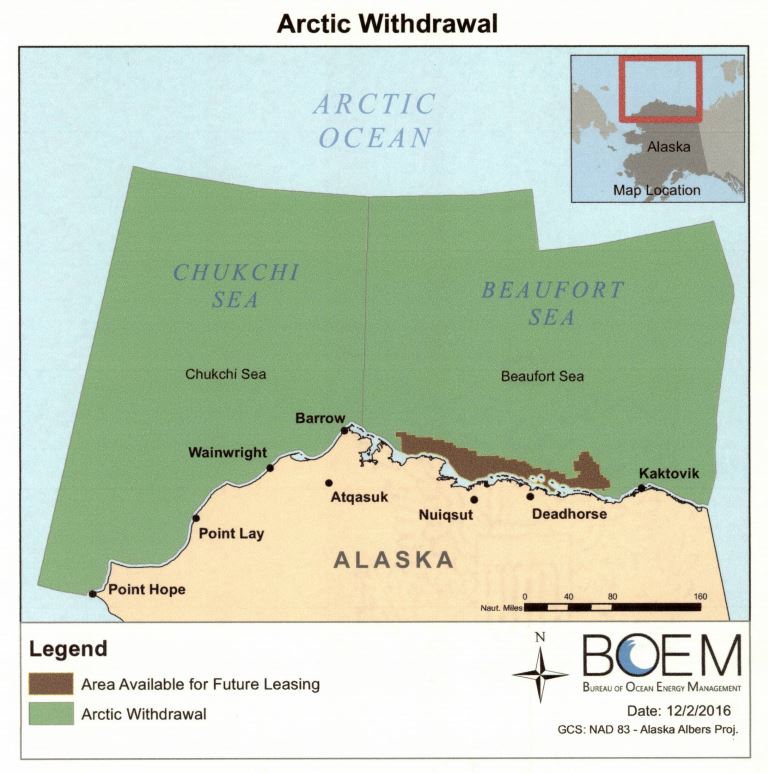
 A surge in lease sales along Alaska’s west and north coasts has spurred predictable resistance from locals and environmental groups. While the effect of any possible oil spills in harsh waters is certainly a major focus of concerns being voiced, the impacts of the first phase of oil and gas exploration have moved to the forefront of discussions. The oil industry is gearing up to explore a record number of offshore lease areas in the next few years, and this summer, up to five seismic survey vessels are scheduled to be off the Alaskan coast, firing airguns 2-4 times per minute and listening for the echoes Read the rest of this entry »